A closer look.
Diamond settings
A setting is the metalwork that holds a stone in place. It shapes how much of the diamond you see, how it catches light and how it feels to wear.
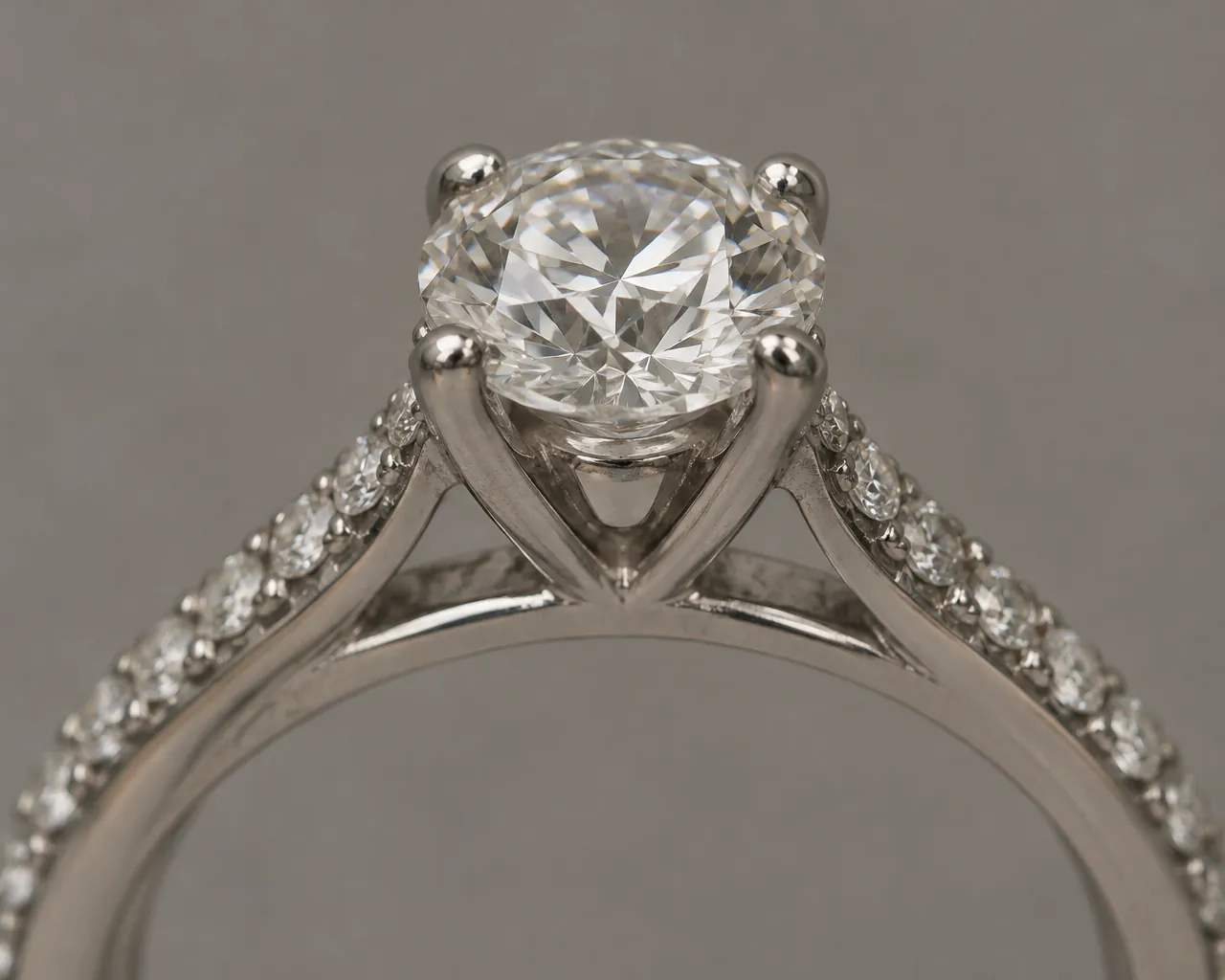
- Prong
- Slim metal claws, usually four or six, grip the stone at its edge. Prongs show the most of the diamond and let light in from the sides.
- Cathedral
- Arches of metal rise from the band to support the center setting, lifting the stone and giving the ring a tapered profile from the side.
- Bezel
- A thin rim of metal surrounds the stone’s outer edge. It wraps and protects the girdle and has a smooth, low profile.
- Pavé
- Many small diamonds are set close together and held by tiny beads of metal, creating an almost continuous surface of stones.
- Channel
- A row of stones sits between two parallel walls of metal, with no metal between the stones. The edges of the band stay smooth.
- Halo
- A ring of small diamonds surrounds a center stone, framing it and adding brightness around its outline.
Good to know
- Settings with raised prongs can catch on fabric; lower, enclosed settings such as bezels sit closer to the finger.
- Any setting benefits from an occasional check by a jeweler to make sure the stones remain secure.
- Where a product page lists its setting, that description applies to that specific piece.